

Blog
Makhana Quality Grading: A Complete Guide for Buyers and Sellers

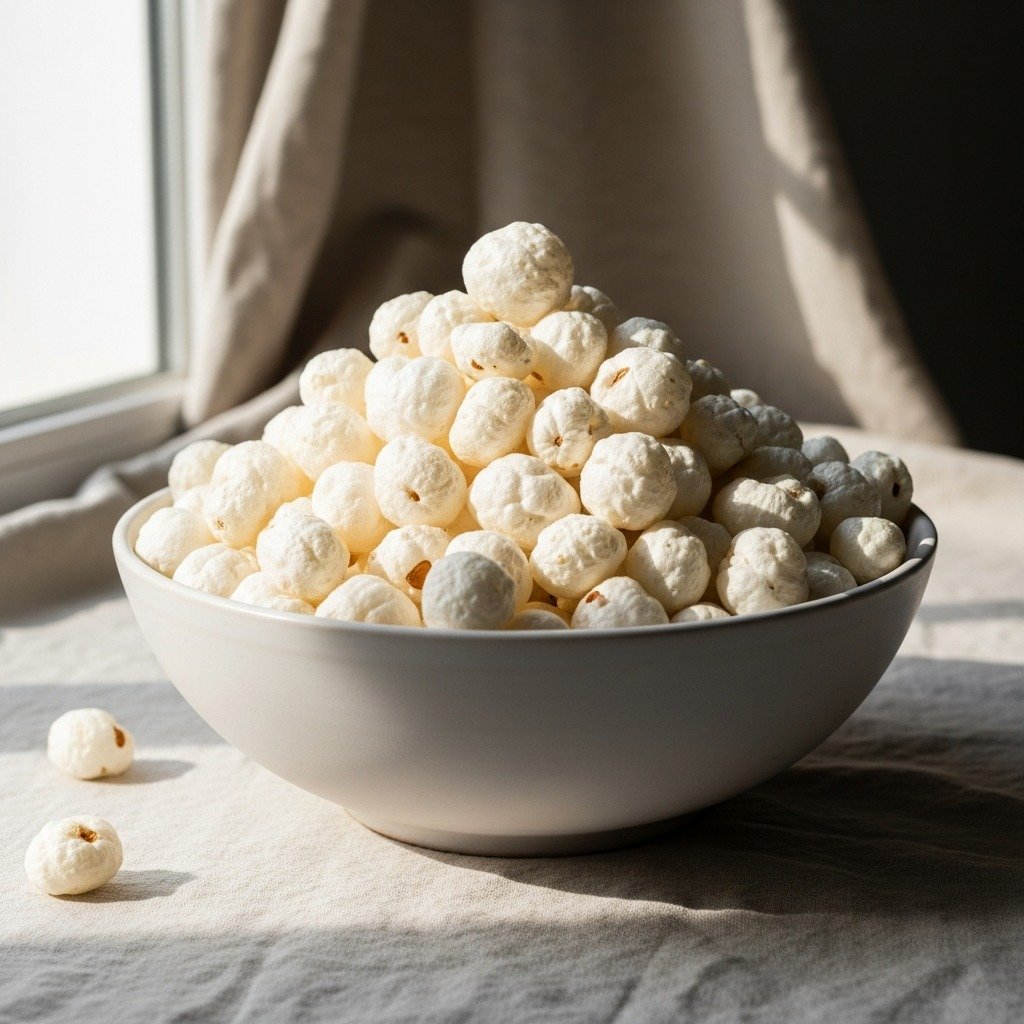
# Makhana Quality Grading: A Complete Guide for Buyers and Sellers
Whether you’re a processor, trader, or consumer, understanding makhana quality grading is essential for making informed decisions. This comprehensive guide will help you identify quality parameters, understand grading systems, and ensure you get what you pay for.
## Why Grading Matters
### For Sellers:
– **Price Optimization**: Better grades command premium prices
– **Market Positioning**: Target the right customer segment
– **Quality Consistency**: Build reputation and trust
– **Reduced Disputes**: Clear quality parameters
### For Buyers:
– **Value for Money**: Pay appropriately for quality received
– **Application Suitability**: Right grade for intended use
– **Shelf Life Prediction**: Better grades store longer
– **Customer Satisfaction**: Deliver consistent quality
## Primary Grading Parameters
### 1. Size (Most Critical Factor)
Makhana is primarily graded by size, measured in millimeters.
**Traditional Names and Modern Equivalents**:
| Grade Name | Size (mm) | Description | Price Range (₹/kg) |
|————|———–|————-|——————-|
| **Lawa/Lava** | 16+ mm | Largest, premium | 800-1200 |
| **Murra** | 12-15 mm | Large, popular | 600-800 |
| **Samundi/Samoni** | 10-11 mm | Medium, versatile | 450-600 |
| **Tukda/Bindi** | 8-9 mm | Small | 350-450 |
| **Chatni** | <8 mm | Smallest, economy | 250-350 |
**Visual Identification**:
- **Lawa**: Approximately the size of a large grape
- **Murra**: Size of a marble
- **Samundi**: Size of a small marble/large chickpea
- **Tukda**: Size of a chickpea
- **Chatni**: Size of a lentil
**Market Preference**:
- **Export Markets**: Prefer Lawa and Murra (uniform, large)
- **Domestic Retail**: Murra and Samundi (balanced price-quality)
- **Processing/Flavoring**: Samundi and Tukda (cost-effective)
- **Institutional/Bulk**: Mixed or lower grades (cost consideration)
### 2. Color
**Ideal Characteristics**:
- ✅ Pure white to off-white
- ✅ Uniform color across batch
- ✅ No yellowing or browning
- ✅ Natural appearance
**Color Defects and Causes**:
| Defect | Appearance | Cause | Impact |
|--------|------------|-------|--------|
| Yellowing | Pale yellow tinge | Over-roasting, age | 5-10% price reduction |
| Brown spots | Dark brown areas | Burning during roasting | 10-20% price reduction |
| Blackening | Black patches | Excessive heat, mold | Rejected/very low price |
| Uneven color | Patchy appearance | Inconsistent processing | 5-15% price reduction |
**Color Grading**:
- **A Grade**: Pure white, uniform
- **B Grade**: Off-white, minor variations
- **C Grade**: Yellowish, significant variations
### 3. Moisture Content
**Critical Parameter for Storage and Shelf Life**
**Ideal Ranges**:
- **Raw Makhana (after sun-drying)**: 12-14%
- **Processed Makhana (ready for packaging)**: 6-8%
- **Export Quality**: <6%
**Testing Methods**:
1. **Professional**: Moisture analyzer (₹30,000-80,000)
- Accurate to 0.01%
- Takes 10-15 minutes
- Essential for serious processors
2. **Practical Field Test**:
- Break a makhana - should snap crisply
- Soft or rubbery = high moisture
- Should sound hollow when shaken
**Moisture Impact**:
- **<6%**: Excellent, long shelf life (18+ months)
- **6-8%**: Good, standard shelf life (12 months)
- **8-10%**: Acceptable for immediate sale only
- **>10%**: Risk of mold, reduced quality, short shelf life
### 4. Breakage Percentage
**Definition**: Proportion of broken or damaged pieces in a batch
**Acceptable Limits**:
– **Premium Grade**: <5% breakage
- **Standard Grade**: 5-10% breakage
- **Economy Grade**: 10-20% breakage
- **Rejected**: >20% breakage
**Common Causes of Breakage**:
– Poor handling during transportation
– Over-drying (makes brittle)
– Mechanical damage during processing
– Pest damage
– Age and deterioration
**Economic Impact**:
Each 5% increase in breakage typically reduces value by 10-15%
### 5. Puffiness/Pop Quality
**What is Puffiness?**
The extent to which makhana has expanded during roasting process.
**Ideal Characteristics**:
– Light and airy texture
– Hollow interior clearly visible
– Thin, crisp walls
– Consistent pop across batch
**Grades**:
– **Full Pop**: 100% expanded, premium
– **Good Pop**: 85-99% expanded, standard
– **Partial Pop**: 70-85% expanded, economy
– **Poor Pop**: <70% expanded, rejected/animal feed
**Testing**:
- Visual inspection
- Weight-to-volume ratio (well-popped is lighter)
- Cross-section examination
### 6. Cleanliness and Purity
**Foreign Matter**:
Should be completely absent or <0.1%
**Types of Contamination**:
- Husk pieces (black shells)
- Dust and dirt
- Other seeds or grains
- Stones or grit
- Insect parts
**Cleaning Standards**:
- **Export/Premium**: Zero visible contamination
- **Retail Standard**: <0.1% foreign matter
- **Bulk/Economy**: <0.5% foreign matter
**Financial Impact**:
- Each 0.5% contamination = 10-20% price reduction
- Presence of stones/metal = automatic rejection
### 7. Uniformity
**Within-Batch Consistency**:
**Size Uniformity**:
- Premium: 90%+ within 2mm size range
- Standard: 80%+ within 2mm size range
- Economy: 70%+ within 2mm size range
**Color Uniformity**:
- Premium: No visible color variation
- Standard: Minor variations acceptable
- Economy: Visible but not extreme variations
**Shape Uniformity**:
- Premium: 90%+ well-formed, round
- Standard: 80%+ well-formed
- Economy: Some irregular shapes acceptable
### 8. Crispness/Texture
**Ideal Texture**:
- Crisp snap when bitten
- Light, airy mouthfeel
- Melts quickly in mouth
- Not chewy or rubbery
**Defects**:
- Rubbery texture = excess moisture
- Hollow sound but hard = over-roasted
- Chewy = partially processed or aged
- Soft/soggy = moisture absorption
**Shelf-Life Indicator**:
Loss of crispness is the first sign of quality deterioration
## Comprehensive Grading System
### Premium/Export Grade (A+)
**Size**: Lawa/Murra (12mm+)
**Color**: Pure white, uniform
**Moisture**: <6%
**Breakage**: <3%
**Puffiness**: 95%+ full pop
**Cleanliness**: Zero visible contamination
**Uniformity**: 95%+ within specifications
**Price Range**: ₹800-1200/kg
**Best For**: Export, premium retail, gifting
**Packaging**: High-barrier, nitrogen-flushed
**Target Market**: International, urban premium stores
### Standard/Retail Grade (A)
**Size**: Murra/Samundi (10-15mm)
**Color**: Off-white, minimal variation
**Moisture**: 6-8%
**Breakage**: 5-8%
**Puffiness**: 85-95% good pop
**Cleanliness**: <0.1% foreign matter
**Uniformity**: 85%+ within specifications
**Price Range**: ₹500-700/kg
**Best For**: Domestic retail, online sales
**Packaging**: Metallized pouches
**Target Market**: Middle-class urban, health-conscious
### Economy/Bulk Grade (B)
**Size**: Samundi/Tukda (8-11mm)
**Color**: Off-white to light yellow
**Moisture**: 8-10%
**Breakage**: 10-15%
**Puffiness**: 75-85% good pop
**Cleanliness**: <0.5% foreign matter
**Uniformity**: 75%+ within specifications
**Price Range**: ₹350-500/kg
**Best For**: Institutional, bulk buyers, processing
**Packaging**: Simple printed pouches, bulk bags
**Target Market**: Caterers, hostels, budget stores
### Industrial/Processing Grade (C)
**Size**: Mixed, including Chatni
**Color**: Variable
**Moisture**: 10%+
**Breakage**: 15-25%
**Puffiness**: Variable
**Cleanliness**: <1% foreign matter
**Uniformity**: Not critical
**Price Range**: ₹250-400/kg
**Best For**: Further processing, flavoring, institutional cooking
**Packaging**: PP bags, bulk packaging
**Target Market**: Food processors, manufacturers
## Grading Process: Step-by-Step
### Stage 1: Visual Inspection
**What to Check**:
1. Overall appearance (color, uniformity)
2. Presence of foreign matter
3. Visible damage or defects
4. Shape consistency
**Sample Size**:
- Minimum 500g sample from each lot
- For large lots (>500kg), multiple samples from different sections
### Stage 2: Size Grading
**Equipment Needed**:
– **Manual**: Grading sieves (different mesh sizes)
– Cost: ₹5,000-15,000 for set
– Capacity: 10-20 kg/hour
– **Mechanical**: Vibrating screens, destoners
– Cost: ₹50,000-2 lakhs
– Capacity: 100-500 kg/hour
**Process**:
1. Pass through largest mesh (16mm) – retains Lawa
2. Pass through 12mm mesh – retains Murra
3. Pass through 10mm mesh – retains Samundi
4. Pass through 8mm mesh – retains Tukda
5. What passes through – Chatni
### Stage 3: Quality Parameter Testing
**Moisture Testing**:
– Use moisture analyzer
– Test random samples
– Document readings
**Breakage Assessment**:
– Count broken pieces in 100g sample
– Calculate percentage
– Repeat for accuracy
**Puffiness Check**:
– Visual inspection
– Cross-section 10 pieces
– Calculate percentage of well-popped
### Stage 4: Documentation
**Essential Records**:
– Lot number and date
– Size distribution percentages
– Moisture content
– Breakage percentage
– Overall grade assigned
– Photos (for reference)
### Stage 5: Segregation and Labeling
– Separate by grade
– Label clearly with grade and date
– Store separately to maintain grade integrity
## Quality Testing Lab Setup
### Basic Testing Facility (₹50,000-1 lakh)
**Essential Equipment**:
1. Moisture analyzer: ₹30,000-50,000
2. Weighing scales (various capacities): ₹10,000-20,000
3. Grading sieves: ₹5,000-10,000
4. Magnifying glass/microscope: ₹2,000-5,000
5. Color charts: ₹1,000-2,000
6. Storage containers: ₹2,000-5,000
### Advanced Testing Facility (₹2-5 lakhs)
**Additional Equipment**:
1. Spectrophotometer (color measurement): ₹80,000-1.5 lakhs
2. Texture analyzer: ₹1-2 lakhs
3. Metal detector: ₹50,000-1 lakh
4. Digital microscope: ₹30,000-60,000
5. Environmental controls: ₹20,000-40,000
## Buying Guidelines
### For Retailers/Small Businesses
**Pre-Purchase Checklist**:
1. ✅ Request sample before bulk order
2. ✅ Test for moisture (snap test minimum)
3. ✅ Check color uniformity
4. ✅ Assess breakage visually
5. ✅ Verify supplier certifications
6. ✅ Negotiate based on grade
7. ✅ Document grade specifications in contract
**Red Flags**:
❌ Seller refuses to provide sample
❌ Significant color variations
❌ Excessive broken pieces
❌ Musty or off odor
❌ Price too good to be true
❌ No proper documentation
### For Large Buyers/Exporters
**Due Diligence**:
1. **Supplier Audit**: Visit processing facility
2. **Sample Testing**: Third-party lab analysis
3. **Contract Specifications**: Detailed quality parameters
4. **Quality Agreements**: Remedies for sub-standard supply
5. **Regular Monitoring**: Periodic quality checks
6. **Traceability**: Batch-wise documentation
## Selling Guidelines
### Documentation
**Provide to Buyers**:
1. Grade certificate
2. Moisture analysis report
3. Processing date
4. Best before date
5. FSSAI license copy
6. Batch number
7. Storage recommendations
### Transparency
**Build Trust**:
– Allow buyer inspection
– Provide representative samples
– Be honest about grades
– Document any deviations
– Offer grade guarantees
### Pricing Strategy
**Grade-Based Pricing**:
– Clear price list by grade
– Justifiable premiums for better grades
– Volume discounts without compromising grade
– Market-competitive pricing
## Common Grading Mistakes
### For Sellers:
❌ **Mixing grades** to increase volume of premium grade
❌ **Overstating quality** leading to customer dissatisfaction
❌ **Inadequate testing** resulting in inconsistent batches
❌ **Poor storage** causing grade degradation
### For Buyers:
❌ **Buying on price alone** without checking quality
❌ **Inadequate sampling** – checking only top layer
❌ **No moisture testing** leading to shelf-life issues
❌ **Ignoring certification** and relying solely on visual inspection
## Grade Maintenance During Storage
### Critical Factors:
**Temperature**:
– Ideal: 20-25°C
– Maximum: 30°C
– Air-conditioned storage for premium grades
**Humidity**:
– Ideal: <50% RH
- Maximum: 60% RH
- Use dehumidifiers if necessary
**Packaging**:
- Airtight containers/bags
- Vacuum sealing for long-term
- Moisture-proof for premium grades
**Pest Control**:
- Regular fumigation
- Sealed storage areas
- First-in-first-out (FIFO)
**Duration**:
Even premium grades degrade over time:
- 0-6 months: Minimal degradation
- 6-12 months: Slight quality loss
- 12-18 months: Noticeable quality loss
- 18+ months: Significant degradation
## Future of Makhana Grading
### Technology Integration:
**AI-Based Grading Systems**:
- Computer vision for size sorting
- Color consistency analysis
- Automated defect detection
- Real-time quality monitoring
**Blockchain for Traceability**:
- Farm-to-consumer tracking
- Grade verification
- Authenticity certificates
- Transparency in supply chain
**IoT Sensors**:
- Continuous moisture monitoring
- Temperature and humidity tracking
- Alert systems for storage issues
## Conclusion
Understanding makhana grading is fundamental to success in this business – whether you're buying, selling, or processing. Quality grading:
✓ Ensures fair pricing
✓ Reduces disputes
✓ Builds customer trust
✓ Enables market positioning
✓ Supports premium pricing
✓ Facilitates export opportunities
Remember: **Quality is not an accident – it's the result of careful selection, proper processing, and consistent standards.** Companies like **N.K. Makhana Udyog** understand that maintaining strict grading standards is not just about meeting requirements – it's about building a reputation for reliability and excellence.
Whether you're a small trader or a large processor, invest in proper grading systems. Your business success depends on it.