Blog
Makhana in Ayurveda: Ancient Wisdom Meets Modern Nutrition

# Makhana in Ayurveda: Ancient Wisdom Meets Modern Nutrition
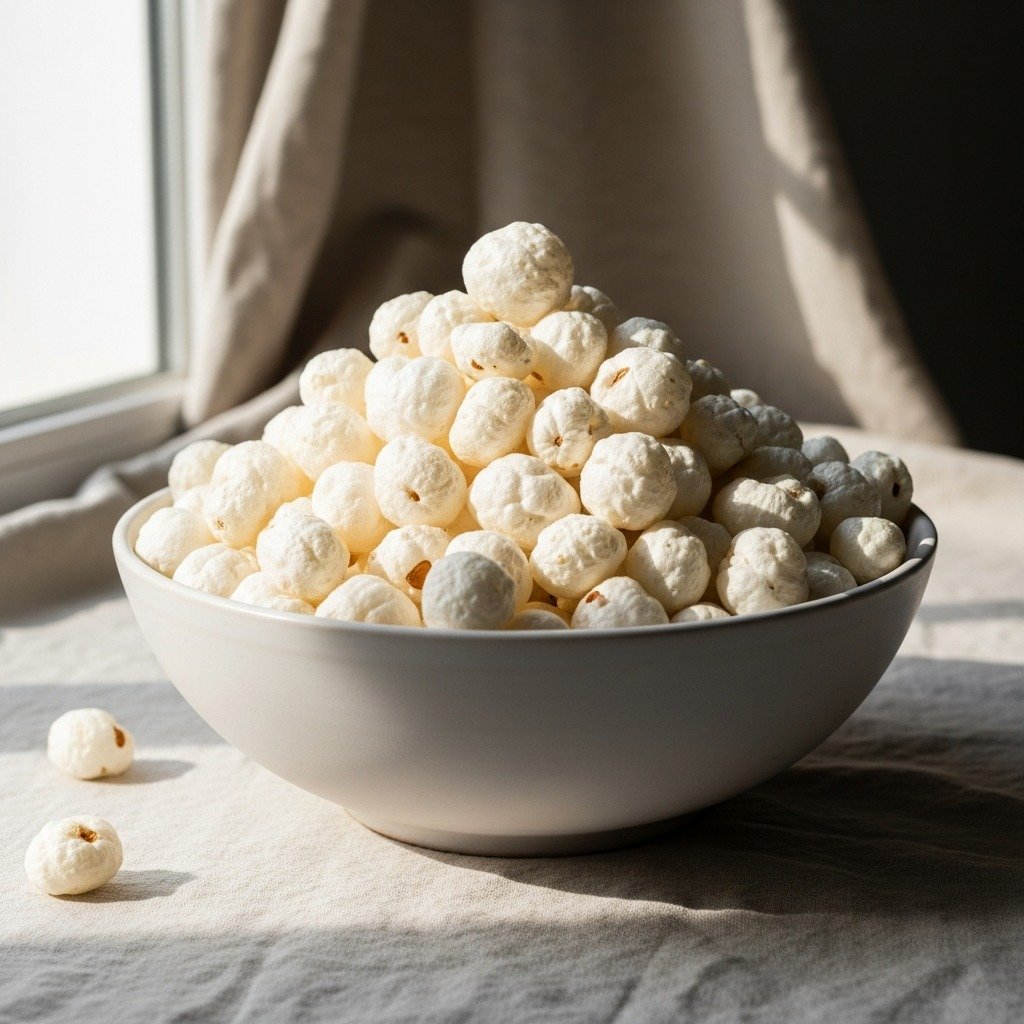
Long before modern nutritional science validated its benefits, Ayurveda recognized makhana as a powerful medicinal food. For over 3,000 years, Ayurvedic practitioners have prescribed fox nuts for various health conditions. Today, science is catching up with this ancient wisdom, revealing why makhana deserves its revered place in traditional Indian medicine.
## Makhana’s Ayurvedic Profile
### Rasa (Taste)
**Madhura (Sweet)**
The sweet taste of makhana provides nourishment and builds body tissues, making it particularly beneficial for those who need to gain healthy weight or recover from illness.
### Guna (Qualities)
– **Guru (Heavy)**: Provides grounding and stability
– **Snigdha (Unctuous/Oily)**: Lubricates and moisturizes tissues
– **Mridu (Soft)**: Gentle on the digestive system
### Virya (Potency)
**Sheeta (Cooling)**
Makhana has a cooling effect on the body, making it particularly beneficial during summer months and for people with Pitta constitution.
### Vipaka (Post-Digestive Effect)
**Madhura (Sweet)**
Maintains the sweet quality after digestion, continuing to nourish all body tissues.
### Dosha Effects
– **Balances Vata**: The heavy, oily qualities calm Vata dosha
– **Balances Pitta**: The cooling nature soothes Pitta imbalances
– **May increase Kapha**: When consumed in excess, especially with ghee
## Traditional Ayurvedic Uses
### 1. Reproductive Health (Shukra Dhatu)
Makhana is highly prized as an aphrodisiac and reproductive tonic:
– Increases sperm count and quality
– Enhances fertility in both men and women
– Strengthens reproductive tissues
– Recommended for couples trying to conceive
**Traditional Preparation**: Makhana kheer with milk, saffron, and cardamom
### 2. Kidney Health (Vrikka)
One of makhana’s most celebrated benefits:
– Strengthens kidney function
– Helps prevent kidney stones
– Supports urinary tract health
– Reduces frequent urination
**Traditional Preparation**: Roasted makhana powder in warm milk before bed
### 3. Heart Health (Hridaya)
Ayurveda recognized makhana’s cardiac benefits centuries ago:
– Strengthens heart muscles
– Calms palpitations
– Reduces excessive heat in the heart
– Supports healthy blood circulation
**Traditional Preparation**: Makhana with rose water and honey
### 4. Digestive Health (Agni)
Despite being heavy, makhana is easy to digest when prepared properly:
– Soothes inflammation in digestive tract
– Helps with diarrhea when roasted
– Nourishes intestinal lining
– Balances stomach acid
**Traditional Preparation**: Light roasting with cumin and rock salt
### 5. Mental Clarity (Buddhi)
Makhana is considered a Medhya Rasayana (brain tonic):
– Enhances memory and concentration
– Calms anxiety and stress
– Promotes restful sleep
– Supports nervous system health
**Traditional Preparation**: Makhana with brahmi and shankhpushpi herbs
### 6. Joint and Bone Health (Asthi Dhatu)
The calcium and phosphorus content was intuited by ancient practitioners:
– Strengthens bones
– Reduces inflammation in joints
– Helps with arthritis symptoms
– Supports spinal health
**Traditional Preparation**: Makhana cooked with milk and turmeric
## Ayurvedic Preparations and Formulations
### For Different Doshas
#### Vata Balance
**Symptoms**: Anxiety, dry skin, constipation, irregular digestion
**Preparation**:
– Roast makhana in ghee
– Add warming spices: cinnamon, cardamom, ginger
– Consume with warm milk
– Best time: Evening
#### Pitta Balance
**Symptoms**: Acidity, skin inflammation, anger, excessive heat
**Preparation**:
– Roast lightly with minimal oil
– Add cooling herbs: coriander, fennel, coconut
– Consume with rose water or coconut milk
– Best time: Late afternoon
#### Kapha Balance
**Symptoms**: Lethargy, weight gain, excess mucus, slow digestion
**Preparation**:
– Dry roast without oil
– Add stimulating spices: black pepper, turmeric, ginger
– Consume with honey (not heated)
– Best time: Morning
## Seasonal Consumption Guidelines
### Spring (Vasanta Ritu)
– Light roasting, minimal ghee
– Combine with warming spices
– Moderate consumption to avoid Kapha accumulation
### Summer (Grishma Ritu)
– Ideal season for makhana
– Consume with cooling herbs and rose water
– Helps combat heat and dehydration
### Monsoon (Varsha Ritu)
– Roast well to counter dampness
– Add digestive spices
– Helps maintain digestive fire
### Autumn (Sharad Ritu)
– Excellent for Pitta balancing
– Combine with ghee and warming spices
– Supports transition from hot to cold seasons
### Winter (Hemanta & Shishira Ritu)
– Best time for makhana kheer
– Rich preparations with milk and ghee
– Provides warmth and nourishment
## Classical Ayurvedic References
### Charaka Samhita
Mentions makhana’s use in:
– Vajikaran (aphrodisiac formulations)
– Balya (strength-promoting preparations)
– Brimhaniya (nourishing therapies)
### Sushruta Samhita
Describes makhana for:
– Mutravaha srota (urinary system disorders)
– Shukravaha srota (reproductive system health)
### Bhavaprakasha Nighantu
Details makhana’s properties:
– Vrishya (aphrodisiac)
– Grahi (absorbent, helpful in diarrhea)
– Balya (strength-promoting)
## Modern Validation of Ancient Wisdom
Recent scientific studies confirm Ayurvedic claims:
### Reproductive Health
Studies show makhana contains compounds that support:
– Hormonal balance
– Sperm motility
– Fertility markers
### Kidney Function
Research validates its benefits for:
– Nephroprotective properties
– Reduced kidney stone formation
– Improved urinary markers
### Cardiovascular Health
Scientific evidence supports:
– Cholesterol reduction
– Blood pressure regulation
– Anti-inflammatory effects
### Anti-Aging Properties
Modern research confirms:
– High antioxidant content
– Anti-inflammatory compounds
– Cellular regeneration support
## Therapeutic Combinations
### Makhana + Ashwagandha
**For**: Stress, anxiety, weakness, low energy
**Benefit**: Powerful adaptogenic combination
**Preparation**: Roasted makhana with ashwagandha powder in warm milk
### Makhana + Shatavari
**For**: Women’s health, hormonal balance, lactation
**Benefit**: Nourishes reproductive tissues
**Preparation**: Makhana kheer with shatavari powder
### Makhana + Brahmi
**For**: Memory, concentration, mental clarity
**Benefit**: Enhanced cognitive function
**Preparation**: Makhana with brahmi in milk
### Makhana + Turmeric
**For**: Inflammation, joint pain, immunity
**Benefit**: Powerful anti-inflammatory combination
**Preparation**: Golden milk with makhana powder
### Makhana + Ginger
**For**: Digestion, metabolism, circulation
**Benefit**: Warming and digestive
**Preparation**: Roasted makhana with ginger tea
## Contraindications and Precautions
While generally safe, Ayurveda recommends caution in:
### High Kapha Conditions
– Obesity with sluggish metabolism
– Excessive mucus production
– Very sedentary lifestyle
**Solution**: Consume in moderation with warming spices
### Poor Digestion
– Very weak digestive fire
– Immediate post-illness recovery
**Solution**: Start with small amounts, well-roasted
### Allergies
– Rare allergic reactions to fox nuts
**Solution**: Test small amounts first
## Daily Ayurvedic Routine (Dinacharya) with Makhana
### Morning (6-8 AM)
For Kapha types: Small amount of dry roasted makhana with ginger tea
### Mid-Morning (10-11 AM)
For all types: Roasted makhana as healthy snack
### Afternoon (2-3 PM)
For Pitta types: Makhana with coconut water
### Evening (5-6 PM)
For Vata types: Makhana with warm milk
### Night (Before Bed)
For insomnia: Makhana powder in warm milk with nutmeg
## Integration with Modern Lifestyle
### For Office Workers
– Keep roasted makhana at desk
– Combats stress and afternoon energy dips
– Supports mental clarity during long hours
### For Athletes
– Post-workout recovery snack
– Provides sustained energy
– Supports muscle recovery
### For Students
– Enhances memory and concentration
– Provides steady energy for studying
– Reduces stress during exams
### For Seniors
– Easy to digest
– Supports bone and joint health
– Gentle on digestive system
## Conclusion
The ancient Ayurvedic physicians possessed profound knowledge about makhana’s therapeutic properties. Their recommendations, based on thousands of years of observation and experience, are now being validated by modern science.
By understanding both the traditional wisdom and contemporary research, we can optimally incorporate this remarkable superfood into our lives. Whether you follow Ayurvedic principles or simply seek natural health solutions, makhana offers a bridge between ancient healing traditions and modern nutritional science.
The key is to consume makhana mindfully, choosing preparations that suit your constitution, season, and specific health needs. In doing so, you honor both timeless wisdom and cutting-edge nutrition.